
What happens between fun at home and first grade?
It's called things like preschool, head start, and kindergarten. It sounds great doesn't it? We can give our child a head start and really be ready for first grade. This can happen anywhere from three to five. Are there any consequences. Unless you found a Montessori school that closely sticks to the original principles, there are some consequences. Montessori has a method of teaching to the age and development of kids.
Points 4 & 5 in this site called 7 steps to protect your children's vision from the rigors of the classroom have covered the unintended dangers. Point 7 7 steps to protect your children's vision from the rigors of the classroom discusses the difficulty of getting education to change so our kids vision won't be damaged and their learning overburdened.
Our answer to this dilemma is our Two Steps to Academic Relief program. There are two steps:
1. Lens therapy to alleviate the burden on the eyes of reading material above our kids intellectual level and the over use of digital devices. See Lens Therapy for more information.
It's called things like preschool, head start, and kindergarten. It sounds great doesn't it? We can give our child a head start and really be ready for first grade. This can happen anywhere from three to five. Are there any consequences. Unless you found a Montessori school that closely sticks to the original principles, there are some consequences. Montessori has a method of teaching to the age and development of kids.
Points 4 & 5 in this site called 7 steps to protect your children's vision from the rigors of the classroom have covered the unintended dangers. Point 7 7 steps to protect your children's vision from the rigors of the classroom discusses the difficulty of getting education to change so our kids vision won't be damaged and their learning overburdened.
Our answer to this dilemma is our Two Steps to Academic Relief program. There are two steps:
1. Lens therapy to alleviate the burden on the eyes of reading material above our kids intellectual level and the over use of digital devices. See Lens Therapy for more information.
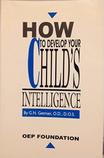
2. Home procedures to enhance your child's vision skills that are overburdened by academics above your child's level . As national education can not reverse this trend when it will count for your child, our answer is to help you advance their vision skills. Years ago Dr. Getman wrote a book to do just what we want your child to go through: a method to enhance their vision and learning. He wrote How to Develop Your Child's Intelligence. We provide the book but more importantly a step by step method to perform and record the routines in a sequential manner.
School screening started in 1947 and minimally changed in 2005 with no recognizable difference. In other words, it has not changed since 1947. California School Screening does not detect a visually related learning problem. Vision processing, the most important vision skill in visually related learning problems, was not in widespread treatment until 1988.

Give us a call at 334-2020 and find out if a visually related learning problem exists and have it treated before school starts again.

Sure, ruin their eyes even before pre-school. With the distance he is watching, he needs to focus his eyes at least 8 diopters. The maximum he should focus his eyes is 2.5 diopters. That's like older people having to wear four times the average power of reading glasses.