Concussion and Vision: Yes, we can help a lot.

|
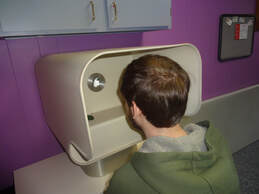
Simple tests can determine vision damage from a concussion. We use the Developmental Eye Movement test (DEM). The test is simple. You read a series of numbers as rapidly as possible. The test evolved from Drs. Pierce and King. Dr. Devick added to it. For decades we have used the DEM test for concentration skills. With the emphasis on concussions in sports, accidents, and military, the same test is now used to determine concussions.
|
|
This test has caught on so much that the Mayo clinic established a partnership with the Dr Stephen Devick who perfected the King -Devick Sideline Test for concussions.
|

|
Yet, as important as that test is, it is not the main test we use in the office. We use three:
1. A thorough case history of TBI events.
2. Observation of pupillary responses.
3. Vision field testing
1. A thorough case history of TBI events.
2. Observation of pupillary responses.
3. Vision field testing
|
Not only could we help athletic teams administer the test as a sideline indicator of concussion, vastly more importantly we provide non-invasive treatment for the vision consequences of head trauma as well as whiplash. See Light Therapy. You don't have to have a concussion to need treatment.
|
|
Among many others we have treated a Vietnam Vet with a head injury who was blind with reduced side vision (see Blake's Vision Therapy Story in Vision Therapy, Success Stories), a 78-year-old stroke victim who lost half his vision field, and a 9-year-old who fell on a concrete floor. A neurologist stated we saved the life of a patient when we detected a pituitary tumor with our vision field test. It should not be confused with an automated instrument using flashing lights. We have an Occulus version of it but use it for other reasons like glaucoma detection.
|
|
|
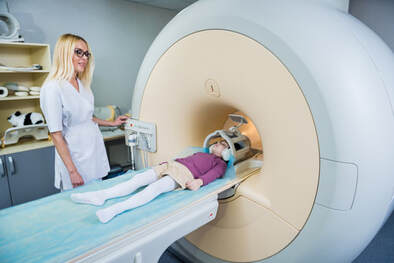
Recently a patient's vision field revealed potential damage near the optic tracks indicating pituitary involvement, possibly a tumor. It would take weeks to go to the PCP to get a referral for an MRI and cost over 2 G. We provided light therapy for 10 visits at $500 and improved the vision fields. That proved the pituitary was not involved which the time-consuming and expensive MRI would also prove. Thus, time and large expense would have reached the same conclusion our less expensive treatment did.
|
At he same time we accomplished more than the MRI by also enhancing her vision, which the MRI would not do.. Please, this is not a criticism of an MRI. It just shows sometimes simpler is better.